
Summer: The Perfect Time to Optimize Your Waste Management
The landfill tax increased again in January. Here’s why that’s actually good news, and why summer is the best season to act.
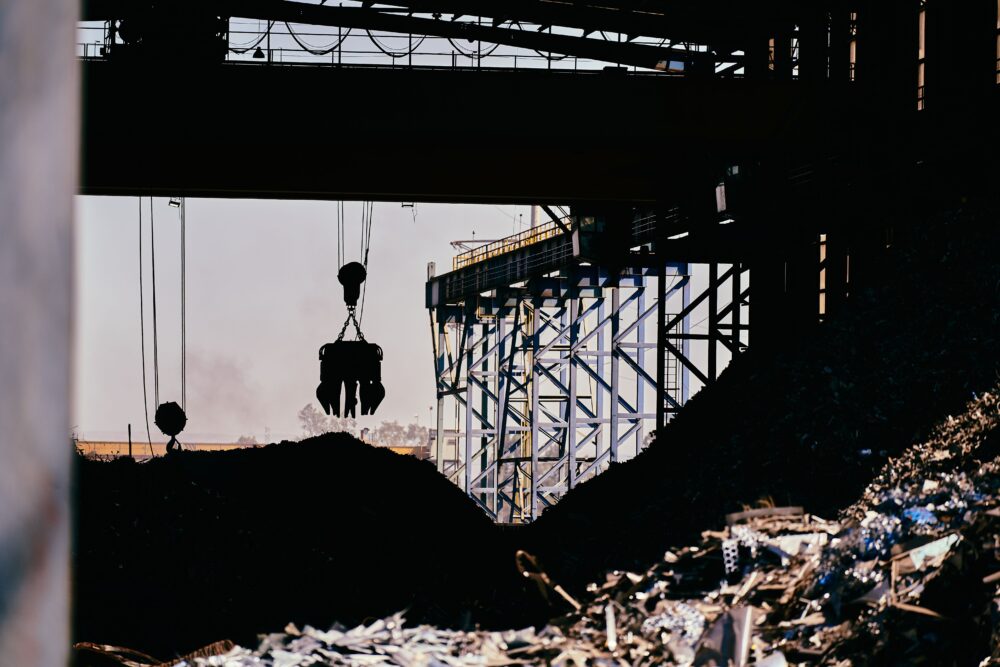
The levy goes up every year: what that means for your business
Every January, Quebec’s landfill disposal levy increases. For many businesses, the reaction is always the same: a sigh, a shrug, and on to the next thing.
At S3R, we see it differently.
This increase is not bad news. It is a clear signal, and for businesses willing to act, an opportunity. Here’s why summer is y the right time take a closer look.
The facts on Quebec’s landfill levy
Since January, Quebec’s landfill disposal levy has increased again. And it will keep rising: the Ministry of the Environment applies an annual indexation of $2 per tonne, every January.
This is not a one-time adjustment. It is a deliberate, government-driven policy with a clear s message: landfilling will become more expensive, year after year.
Every tonne your business sends to landfill costs more this year than it did last year. And it will cost even more next year. This isn not a stable expense line, it rises automatically every January.
Why the levy increase is actually good news
Because for the first time, your financial interests and your environmental goals are moving in the same direction.
For a long time, “doing better for the planet” and “protecting the bottom line” were treated as two separate goals, sometimes even as opposites. The levy changes that. As it rises, every tonne diverted from landfill becomes more valuable.
The savings from recovering material instead of burying it grow each year. . That is the idea behind S3R’s colour: green represents both environmental responsibility and financial gain, two wins that now move forward together.
The increase rewards businesses that analyze, sort, and recover value from their waste streams. It also makes landfilling more costly for those who continue as before. In other words, it turns an imposed cost into a performance lever you can control.
A concrete example: what does inaction actually cost?
Let’s take a business that sends 1,000 tonnes of waste to landfill every year.
At $36 a tonne, the government levy alone totals $36,000 a year. Next year, at $38, that’s $38,000. The following year, at 40$, it reaches, $40,000. And that is before transportation, equipment rental, or site fees.
Over five years, that bill rises automatically on the levy alone, even if nothing changes in your operations. And here’s the key point: negotiating a better supplier price will not change this portion of the cost.
The trap nobody wants to fall into

Here is the industry’s most common pattern: every 3 to 5 years, you ask your supplier for new pricing, sign, close the file and move on.
But while you can negotiate transportation or collection rates, you cannot negotiate a government levy designed to increase every January.
You could get the best collection price in Quebec, but it will not stop the levy from climbing. The only lever that affects this part of your bill is not the price you renegotiate, it is the volume of material you stop sending to landfill.
And that’s not something a new quote request will solve. Why repeat the same process every 3 to 5 years, for a structure that’s already outdated? The real answer lies elsewhere: analyze, restructure, optimize, and transform.
What a real waste management optimization process looks like
Optimizing your waste management is not about switching trucks or adding a recycling bin. It’s about rethinking the entire structure.
Concretely, this involves:
A detailed analysis of your contracts, invoices, and actual services;
An on-site audit to understand what’s really happening in your operations;
Scenario modelling that shows, in clear numbers, what you could save;
A turnkey rollout, with ongoing follow-up to ensure the gains last.
The goal is not to “pay slightly less for the same service.” It is to reduce what goes to landfill at the source, recover value where possible, and simplify management that’s often scattered across multiple suppliers. That is where 40% to 80% of savings are found, not in a small last-minute discount.
See the savings our clients have achieved.

The real obstacle: not money, but time
When we bring this up with business owners, the answer is almost always the same:
“I know I should look into this. But honestly, I don’t have time to deal with my waste.”
That is perfectly understandable. Waste management is not your core business. You may be running a plant, adistribution centre, or a food processing company. You have hundreds of priorities ahead of the bins in your yard.
That is where the trap closes in. This “important but never urgent” project keeps getting pushed to next quarter. Meanwhile, the bill keeps rising, without waiting for your calendar to clear.
It is not a lack of will. It is a lack of time and perspective. Two things summer can help provide.
Why summer is the best time to revisit your waste management
For many businesses, summer brings littlebreathing room. The pace slows, some files quiet down, and calendars open up. It is often the best time of year to step back and review a project that you have been postponing for months.
That is exactly the window required for this exercise. Not to sign in a rush, but to understand where you stand, and what can be improved.
A proper diagnostic does not need to consume your days. It only requires a fresh review of your contracts, invoices, and material flows. Summer is the ideal time to begin this work before peak operations return in the fall.
5 questions to ask before renewing your waste management contract
If you do only one exercise this summer, make it this one. Five honest questions that are worth more than a dozen quotes:
-
Do I really know my material flows?
Beyond “we have bins and a compactor,” what materials are involved, in what quantities, and what value could they hold?
-
Does my current contract still align with how my business operates?
Your operations have evolved since you last signed. Have your equipment, collection frequency, and contract terms kept up, or do they reflect an outdated reality?
-
Am I comparing offers… or just prices?
A lower price applied to an outdated structure is still an outdated structure. Comparing numbers is not the same as comparing solutions.
-
Am I compliant with current regulations?
Rules change fast in Quebec, and the gap between “I think so” and “I’m certain” can get expensive, financially and reputationally.
-
Do I have an independent set of eyes on this?
The is often the most important question and the most uncomfortable one.
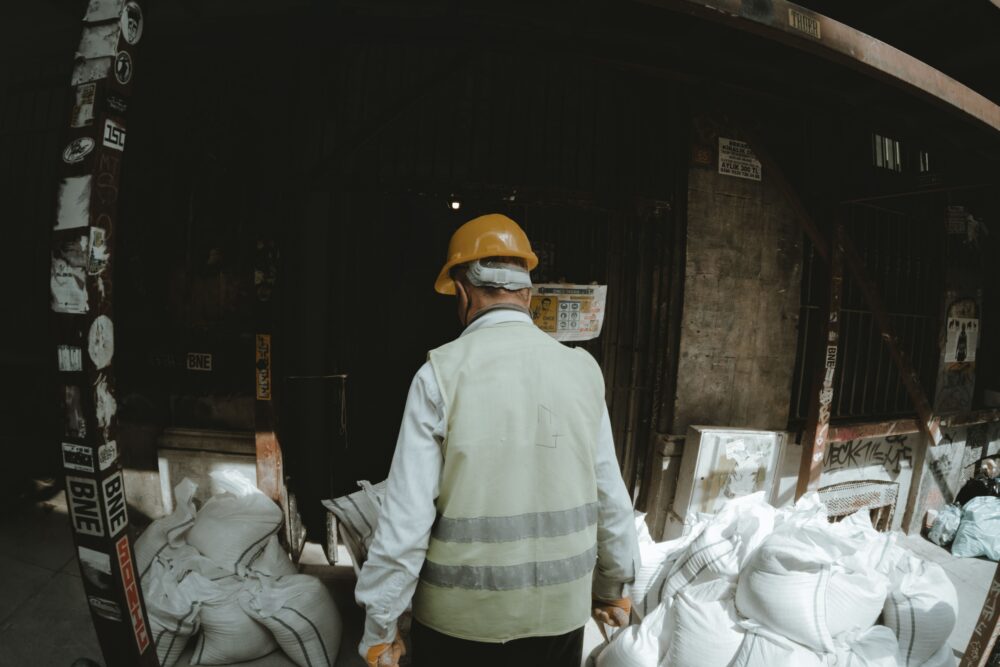
An independent perspective changes everything
The company that hauls and landfills your waste makes earns revenuefrom tonnage. The more material that sent to the site, the better its business model performs. That is not a a criticism, it is simply the nature of their model. But it also means there is little incentive to help you reduce what you send to landfill.
To assess your situation in your interest, not the truck’s, you need a partner whose revenue is not tied totransportation or landfill volume.
That is exactly where S3R fits in. No trucks. No landfill site. No conflict of interest. We are not a waste services provider, we are a performance partner, paid only on the real savings we generate for you, split 50/50, with zero financial risk on your end. If you don’t save, you don’t pay.
The right time is now
The levy will keep rising, every January. That’s a certainty. So the real question is not whether you should revisit your waste management, but when. And there’s no better time than summer, while things are a little quieter, to turn a rising cost into a lasting advantage.
Use the summer to ask the right questions. Fall will arrive before you know it, and it is better to enter it with a head start than with another rising bill.
If “I don’t have time” sounds familiar, that is exactly why S3R exists.
It only takes a few minutes to see whether optimization is worthwhile for your business. Get in touch with us!